
Angle Rue Kadi Iass et Rue Ahmed El Mejjati, Maarif, Casablanca
Menu
HomeDr. Kohen MohamedObesity SurgeryDigestive SurgeryCancer SurgeryBlog Book an appointment

Digestive surgery and benign conditions

Gallbladder, hernias, reflux, appendicitis, proctology: a personalised assessment to determine whether monitoring, medical treatment or surgery is the right course.

Understanding

Benign does not mean harmless

Benign digestive conditions are a common group of disorders that can affect the gallbladder, the abdominal wall, the stomach, the oesophagus, the intestine, the colon, the rectum and the anus.

They are not cancerous, but they can cause pain, digestive symptoms, significant functional difficulty, complications or a reduced quality of life.

In some situations medical treatment is enough. In others, surgery may be necessary.

In Casablanca, Dr Mohamed Kohen treats benign digestive conditions on the basis of a personalised assessment, favouring minimally invasive techniques wherever possible.

Your surgeon

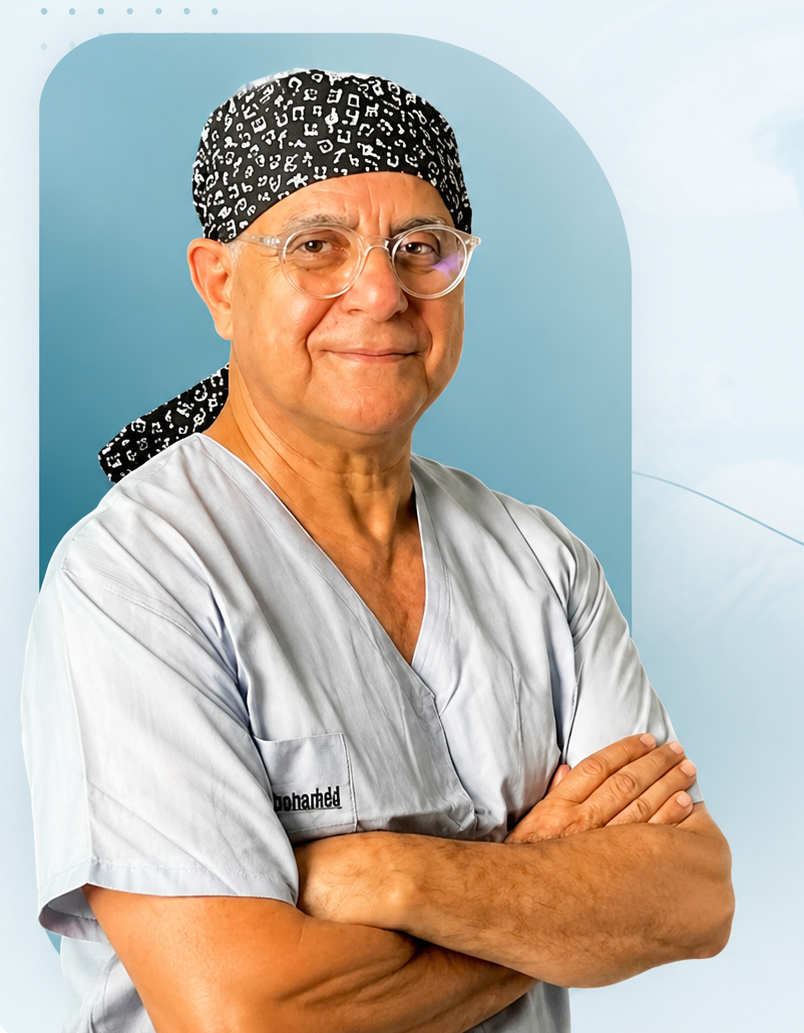
Dr Mohamed Kohen, digestive surgeon in Casablanca

Dr Mohamed Kohen is a visceral and digestive surgeon in Casablanca. A former chef de clinique at Nantes University Hospital (CHU de Nantes) and former university assistant in Nantes, he has practised digestive surgery for more than thirty years.

His practice covers obesity surgery, digestive cancer surgery and surgery for benign digestive conditions.

The aim of the consultation is to understand the symptoms, review the available investigations, confirm the indication for surgery where one exists, and explain clearly the benefits, the risks and the possible alternatives.

Former chef de clinique — CHU de Nantes 30+ years’ experience Casablanca — Maarif

Scope of practice

Which benign digestive conditions may require surgery?

Benign digestive surgery covers in particular:

  • gallstones
  • inguinal, umbilical and femoral hernias
  • incisional hernias following previous surgery
  • gastro-oesophageal reflux and hiatus hernia
  • appendicitis
  • certain complications of diverticulitis
  • haemorrhoids
  • anal fissure
  • anal abscesses and fistulas
  • pilonidal sinus
  • certain benign lesions of the colon, stomach or intestine

Each situation must be assessed individually. The fact that a condition is benign does not always mean that it is without consequence.

Management by condition

The benign digestive conditions treated

Surgery is never automatic: the indication depends on the symptoms, the clinical context and the risk of complications.

01

Gallbladder surgery

Gallstones are common. They may remain silent or cause pain known as biliary colic.

When they become symptomatic or complicated, cholecystectomy may be discussed.

Cholecystectomy involves removing the gallbladder. It is most often performed laparoscopically.

It may be indicated for repeated biliary colic, acute cholecystitis, gallstone pancreatitis or other complications related to the stones.

Asymptomatic gallstones do not automatically require surgery. The indication depends on the symptoms, the clinical context and the risk of complications.

02

Hernia surgery

A hernia is the passage of abdominal contents through a weak area of the abdominal wall.

Hernias may be inguinal, femoral, umbilical, or located at the site of a previous surgical scar.

They may cause discomfort, pain, a gradual increase in size or, more rarely, a complication through strangulation.

Surgical treatment aims to repair the weak area of the wall. Depending on the type of hernia, its size, the patient’s history and the clinical situation, the operation may be performed open or laparoscopically.

A prosthetic mesh reinforcement may be needed in many situations in order to reduce the risk of recurrence.

03

Incisional hernia surgery

An incisional hernia is a hernia that appears at the site of a previous abdominal scar.

It can occur after abdominal surgery and present as a swelling, discomfort, pain or a gradual increase in the bulge of the abdominal wall.

Treatment depends on the size of the hernia, its location, the symptoms, previous surgery and the patient’s general condition.

Repair may require reconstruction of the abdominal wall and, in some cases, the placement of a mesh.

04

Gastro-oesophageal reflux and hiatus hernia

Gastro-oesophageal reflux is the abnormal passage of stomach contents back up into the oesophagus.

It can cause heartburn, regurgitation, a chronic cough, night-time discomfort or inflammation of the oesophagus.

Treatment is medical in the first instance in most cases.

Anti-reflux surgery may be discussed in certain patients, particularly where the reflux is documented, where there is a significant hiatus hernia, where symptoms persist despite well-conducted treatment, or where there is prolonged dependence on medication.

The operation aims to correct the hiatus hernia where one is present and to reinforce the anti-reflux barrier.

05

Acute appendicitis

Acute appendicitis is inflammation of the appendix.

It can cause abdominal pain, often in the right iliac fossa, sometimes with fever, nausea or digestive upset.

Diagnosis rests on clinical examination, blood tests and, in some cases, imaging.

Treatment varies with the clinical picture. Where an operation is indicated, appendicectomy is most often performed laparoscopically.

06

Colonic diverticulitis

Diverticulitis is inflammation or infection of colonic diverticula, most often in the sigmoid colon.

Not all diverticulitis requires surgery.

Treatment depends on the severity of the episode and on the presence of an abscess, a perforation, peritonitis, recurrent attacks, a stricture or a fistula.

Surgery may be discussed in certain complicated or recurrent forms, after review of the file and of the imaging studies.

07

Proctology: haemorrhoids, anal fissure, fistula and abscess

Proctological conditions are common and often cause considerable discomfort.

They may present with pain, bleeding, itching, swelling, discharge or difficulty opening the bowels.

Surgical proctology covers in particular:

  • haemorrhoidal disease
  • anal fissure
  • abscesses of the anal margin
  • anal fistulas
  • certain skin or mucosal lesions of the anal region

Treatment is not always surgical. In haemorrhoidal disease, for example, medical and instrumental treatment is sufficient in many situations. Surgery is discussed where these fail, in advanced disease or where the discomfort is significant.

08

Pilonidal sinus

A pilonidal cyst, or pilonidal sinus, is most often located in the natal cleft.

It may cause few symptoms or become complicated by infection, an abscess, chronic discharge or recurrence.

Treatment depends on the clinical picture: acute abscess, chronic disease, recurrence or functional difficulty.

Several surgical techniques may be discussed depending on the extent of the disease and the patient’s profile.

Surgical approach

Minimally invasive surgery for benign digestive conditions

Many benign digestive operations can be performed by laparoscopy.

Minimally invasive surgery means operating through small incisions using a camera and specialised instruments.

In selected situations it can mean less postoperative pain, a faster recovery and an earlier return to normal activities.

The approach is chosen according to the condition, previous surgery, the patient’s anatomy and the requirements of operative safety.

Before surgery

The pathway before the operation

Before any benign digestive operation, the consultation establishes the diagnosis and checks whether surgery is genuinely indicated.

The surgeon reviews the symptoms, the clinical examination, the medical history, the treatment already given and the available investigations.

Depending on the condition, further tests may be needed: ultrasound, CT scan, digestive endoscopy, blood tests or functional studies.

The aim is to propose a suitable strategy, explaining the expected benefits, the risks, the alternatives and the postoperative course.

After surgery

The postoperative course

The postoperative course depends on the type of operation performed.

Some operations allow a rapid return to normal activities, while others require a longer convalescence.

Follow-up monitors wound healing, pain, the resumption of eating, the return of bowel function and the absence of complications.

Instructions on physical activity, returning to work, diet and wound care are given on a case-by-case basis.

Frequently asked questions

Frequently asked questions about benign digestive surgery

Do all hernias need to be operated on?
No. The indication depends on the type of hernia, the symptoms, its size, the risk of strangulation, and the patient’s age, general condition and wishes.
Must the gallbladder always be removed when there are stones?
No. Asymptomatic stones do not automatically require surgery. Cholecystectomy is mainly discussed when the stones become symptomatic or complicated.
Does reflux need to be operated on?
No. Reflux is usually treated medically. Surgery may be discussed in selected situations, after the reflux has been confirmed and a full assessment carried out.
Do haemorrhoids always require surgery?
No. Medical treatment and instrumental procedures are sufficient in many cases. Surgery is discussed where these fail, in advanced forms or where the discomfort is significant.
Is laparoscopy always possible?
No. It depends on the condition, previous surgery, the anatomical situation and operative safety.

Consultation

Book a consultation for a benign digestive condition

Do you have abdominal pain, a hernia, gallstones, reflux, a proctological condition or another benign digestive problem? A consultation allows your situation to be assessed, the diagnosis confirmed, and whether monitoring, medical treatment or surgery is needed to be determined.

Contact & appointments

Contact Dr. Kohen

To ask a question or arrange an appointment with Dr Kohen, please complete the form or contact the practice directly.

    Call