
Angle Rue Kadi Iass et Rue Ahmed El Mejjati, Maarif, Casablanca
Menu
HomeDr. Kohen MohamedObesity SurgeryDigestive SurgeryCancer SurgeryBlog Book an appointment

Surgery for digestive cancers in Casablanca

Personalised care: review of your file, staging workup, multidisciplinary strategy and surgery tailored to the location and stage of the disease.

Understanding

An overall treatment strategy

Digestive cancers are the malignant tumours that develop in the digestive tract and in certain organs associated with it: oesophagus, stomach, colon, rectum, liver, bile ducts and pancreas.

Their management has changed considerably. Surgery retains an essential place in the treatment of many localised or selected digestive tumours, but it now forms part of an overall treatment strategy.

Depending on the location and stage of the disease, treatment may combine surgery, chemotherapy, radiotherapy, targeted therapy or immunotherapy.

Every situation is different. The choice of treatment depends on the location of the tumour, its extent, its biological characteristics, the patient’s general condition and the treatment options available.

In Casablanca, Dr Mohamed Kohen provides the assessment and surgical management of digestive cancers within a personalised, multidisciplinary strategy.

Your surgeon

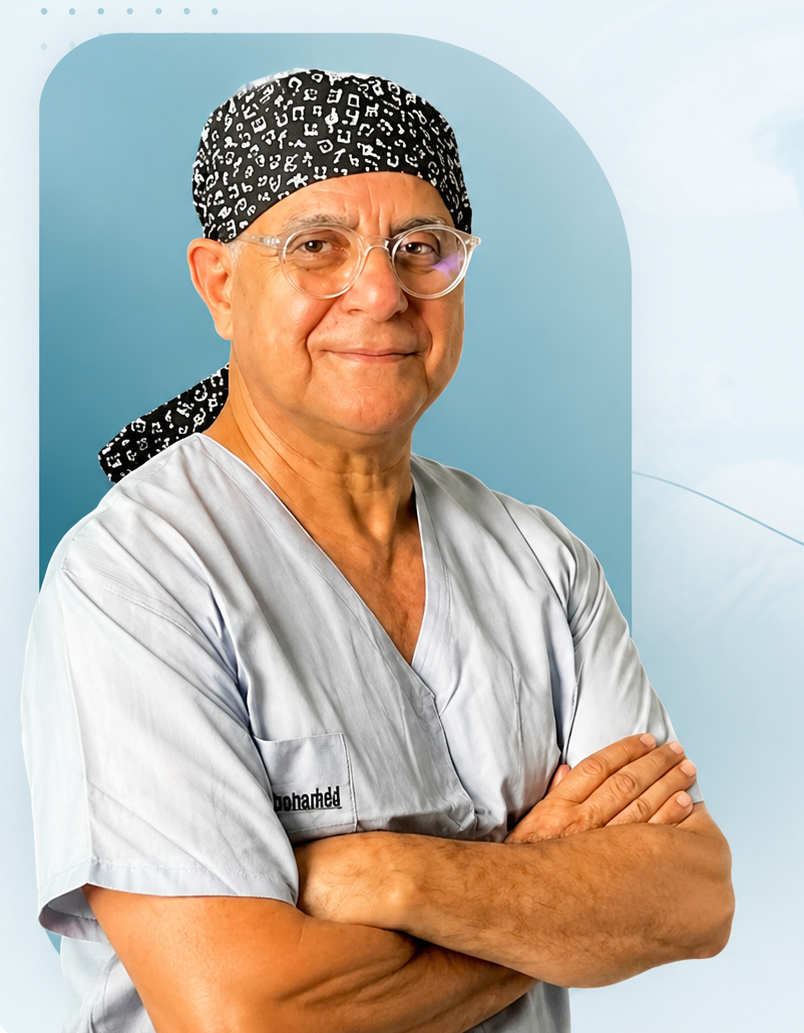
Dr Mohamed Kohen, digestive and cancer surgeon in Casablanca

Dr Mohamed Kohen is a visceral and digestive surgeon in Casablanca. A former chef de clinique at Nantes University Hospital (CHU de Nantes) and former university assistant in Nantes, he has practised digestive surgery for more than thirty years.

His practice covers digestive cancer surgery, obesity surgery and the surgical management of benign digestive conditions.

In digestive oncology, the decision to operate does not depend on the presence of a tumour alone.

Former chef de clinique — CHU de Nantes 30+ years’ experience Casablanca — Maarif

Before any operation

The questions that must be considered

Before any operation, a number of questions must be considered:

  • What exactly is the nature of the tumour?
  • What is its precise location?
  • What is its stage of spread?
  • Should surgery be carried out straight away?
  • Is chemotherapy or radiotherapy needed before the operation?
  • Which operation gives the best oncological control while preserving, where possible, digestive function and quality of life?

The aim is to propose a strategy suited to each patient’s particular situation.

Definition

What is digestive cancer surgery?

Digestive cancer surgery aims to remove a digestive tumour according to precise oncological principles.

Depending on the organ involved and the stage of the disease, the operation may include removal of the tumour, of part or all of the affected organ, and of the relevant lymph node territories.

Surgery is not, however, always the first stage of treatment.

In some situations, medical treatment or radiotherapy may be proposed before the operation. In others, surgery is the first treatment, possibly followed by adjuvant therapy.

This is why managing a digestive cancer rests on a full assessment and a multidisciplinary strategy involving, as appropriate, the digestive surgeon, medical oncologist, gastroenterologist, radiologist, pathologist, radiation oncologist and other specialists.

Management by location

The main digestive cancers treated

Each location follows its own oncological principles and its own treatment strategy.

01

Colon cancer

Colon cancer is one of the most common digestive cancers.

Where the disease is localised and operable, surgery is central to treatment. The operation involves removing the segment of colon bearing the tumour together with its vascular and lymph node territory, then restoring digestive continuity where the situation allows.

Depending on the location of the tumour, different operations may be performed:

  • right hemicolectomy
  • transverse colectomy
  • left hemicolectomy
  • sigmoid colectomy
  • more extensive colectomy in certain particular situations

Any adjuvant treatment depends in particular on the final pathological stage and on the characteristics of the tumour.

02

Rectal cancer

Rectal cancer requires a particularly individualised strategy.

The position of the tumour within the rectum, its distance from the sphincter complex, its local and nodal spread and the imaging findings all directly influence the treatment strategy.

Depending on the case, treatment may be proposed before surgery in order to improve control of the disease and prepare for the operation.

Rectal surgery follows precise technical and oncological principles. Where the tumour and the anatomy allow, the aim is a complete oncological resection while preserving digestive continuity and sphincter function.

A temporary stoma may be necessary in some situations in order to protect a low digestive anastomosis.

03

Stomach cancer

Treatment of gastric cancer depends on the location of the tumour, its extent and its histological type.

Where surgery is indicated, it may involve removing part of the stomach or, in some situations, a total gastrectomy.

The operation also includes a lymph node dissection appropriate to the oncological situation.

Surgery for stomach cancer frequently forms part of an overall strategy that may combine medical treatment before and/or after the operation.

Nutritional assessment and follow-up after gastrectomy are important parts of care.

04

Pancreatic cancer

Pancreatic cancer is a complex disease whose management requires precise assessment of the location of the tumour and of its relationship to the neighbouring vascular structures.

Surgery is reserved for situations in which a complete resection is considered both possible and appropriate.

Depending on the location of the tumour, the main operations are:

  • pancreaticoduodenectomy (Whipple procedure) for certain tumours of the head of the pancreas
  • distal pancreatectomy for certain tumours of the body or tail of the pancreas
  • more rarely, other resections adapted to particular situations

The treatment strategy must be discussed in a multidisciplinary setting in order to determine the respective roles of surgery and medical treatment.

05

Liver tumours and liver metastases

The liver may be the site of primary tumours or of metastases from another cancer, particularly colorectal cancer.

Whether surgical treatment is possible depends on the number and location of the lesions, their relationship to the vascular and biliary structures, the quality of the remaining liver and control of the disease as a whole.

In selected situations, liver surgery may form part of a strategy combining several treatments.

Assessment must be individualised and multidisciplinary.

06

Bile duct cancers

Bile duct cancers cover several different diseases according to the location of the tumour: gallbladder, intrahepatic bile ducts or extrahepatic bile ducts.

Surgical treatment varies considerably with the location and the extent of the disease.

Precise analysis of the imaging and of the staging workup is essential before any treatment decision.

07

Cancer of the oesophagus and gastro-oesophageal junction

Cancers of the oesophagus and of the junction between the oesophagus and the stomach require a complex treatment strategy.

Depending on the location, stage and histological type of the tumour, treatment may combine chemotherapy, radiotherapy and surgery.

Surgery, where indicated, must be considered within a multidisciplinary strategy and after a full assessment of the patient’s general and nutritional condition.

Staging workup

Why is the staging workup essential?

Diagnosing a digestive cancer is not enough to determine treatment.

Before proposing an operation, the stage of the disease must be established and several questions answered:

  • is the disease confined to the organ of origin?
  • is there lymph node involvement?
  • are there metastases?
  • what is the relationship of the tumour to the neighbouring organs and vessels?
  • is the tumour immediately operable?
  • could treatment beforehand improve the therapeutic strategy?

Depending on the location of the tumour, the workup may include endoscopy with biopsies, a thoraco-abdomino-pelvic CT scan, MRI, endoscopic ultrasound, PET-CT or other specific investigations.

The workup is tailored to each type of cancer and to the patient’s particular situation.

Multidisciplinary review

The multidisciplinary decision

Modern management of digestive cancers rests on discussion between several specialists.

The patient’s file is reviewed taking account of the clinical findings, the imaging, the pathology, the tumour stage and the general condition.

This approach makes it possible to define the order of treatments and to answer one fundamental question: what is the best treatment strategy for this particular patient?

Depending on the situation, the strategy may be:

  • surgery first
  • chemotherapy before surgery
  • chemoradiotherapy before surgery
  • medical treatment followed by reassessment of operability
  • surgery followed by adjuvant treatment
  • a combination of several treatment modalities

Surgery is therefore one element of an overall treatment pathway.

Surgical approach

Minimally invasive surgery and digestive oncology

Depending on the location of the tumour, its stage, previous surgery and the anatomical situation, a number of digestive cancer operations can be performed using minimally invasive surgery.

Laparoscopy allows certain operations to be carried out through small incisions, using a camera and specialised instruments.

Minimally invasive surgery (laparoscopic or robotic) may allow, in selected situations, faster postoperative recovery and a reduction in some of the consequences of the surgical approach.

The choice of approach must never, however, compromise the principles of oncological surgery.

The oncological quality of the operation remains the priority. The operative technique is chosen according to the tumour, its extent and the patient’s individual situation.

Patient pathway

The pathway before surgery for a digestive cancer

Learning of a digestive cancer can be a difficult time for the patient and their family.

One of the aims of the surgical consultation is to make the situation easier to understand.

At this consultation, the surgeon reviews:

  • the endoscopy and biopsy results
  • the imaging studies
  • the staging workup
  • the medical and surgical history
  • general and nutritional condition
  • treatment already given
  • the strategy proposed or discussed with the other specialists

Where surgery is indicated, the patient is given information on the type of operation, its aims, the stages of the hospital stay, the possible risks and complications, and the follow-up after the operation.

After the operation

Pathology and adjuvant treatment

Pathological examination of the surgical specimen is an important step after surgery for a digestive cancer.

It establishes the type of tumour, its local spread, any lymph node involvement and the features needed for definitive staging.

This information, together with the complete medical file, determines whether surveillance alone is indicated or whether adjuvant treatment should be discussed.

Follow-up is then organised according to the type of cancer, its stage and the treatments given.

Second opinion

Second opinion in digestive cancer surgery

When a digestive cancer has just been diagnosed, or when a complex operation is proposed, a patient may wish to seek a second surgical opinion.

This consultation allows the file to be reviewed, the available imaging to be re-examined, the proposed strategy to be explained and the different treatment possibilities to be assessed.

A second opinion does not necessarily mean that the initial strategy should be changed. It can also help the patient to better understand the disease, the aims of treatment and the stages of the treatment pathway.

For the opinion to be meaningful, it helps to have the endoscopy reports, the pathology results, the imaging studies and details of any treatment already given.

In summary

A strategy tailored to each patient

There is no single operation for treating digestive cancers.

The strategy depends on the organ involved, the stage of the disease, the biology of the tumour, the patient’s general condition and the treatments available.

Dr Mohamed Kohen sees patients with digestive cancers in Casablanca for surgical assessment, for arranging surgical treatment where it is indicated, and for surgical follow-up.

Every case is considered individually, in order to propose a suitable strategy and to explain clearly to the patient the aims of surgery, its place in the oncological pathway and the treatment alternatives.

Frequently asked questions

Frequently asked questions about digestive cancer surgery

Do all digestive cancers need surgery?
No. The role of surgery depends on the type of cancer, its stage, its location and the patient’s general condition. Some situations require treatment before surgery, while others call for a non-surgical strategy.
Can a digestive cancer be operated on laparoscopically?
Some digestive cancer operations can be performed laparoscopically in selected patients. The decision depends on the location and extent of the tumour, on previous surgery and on the individual situation.
Is chemotherapy always necessary?
No. Whether chemotherapy is indicated depends on the type of cancer, its stage and its characteristics. It may be given before the operation, after the operation, or in some situations without surgery.
Is a stoma always necessary after rectal surgery?
No. Whether a stoma is needed depends on the location of the tumour, the type of operation and the conditions in which the anastomosis is performed. Where a stoma is created, it may be temporary or permanent depending on the situation.
Can liver metastases from a colorectal cancer be operated on?
In selected situations, liver metastases from a colorectal cancer can be treated surgically. The decision depends on many factors and must form part of a multidisciplinary strategy.
When should a surgical opinion be sought?
A surgical opinion may be sought after diagnosis and staging, but also when initial treatment has been given and operability needs to be reassessed.

Consultation

Book a consultation for a digestive cancer surgical opinion

Are you, or someone close to you, being treated for a digestive cancer and would like a surgical opinion? A consultation allows the medical file, the biopsy results and the imaging studies to be reviewed, and the possible role of surgery in the treatment strategy to be explained.

Contact & appointments

Contact Dr. Kohen

To ask a question or arrange an appointment with Dr Kohen, please complete the form or contact the practice directly.

    Call